Heat Pump vs. Furnace in Pennsylvania: Heating Costs Compared
Heat pump or furnace? We explain how fuel sources, installation needs, and cold-weather performance affect heating costs for Lehigh Valley homeowners.
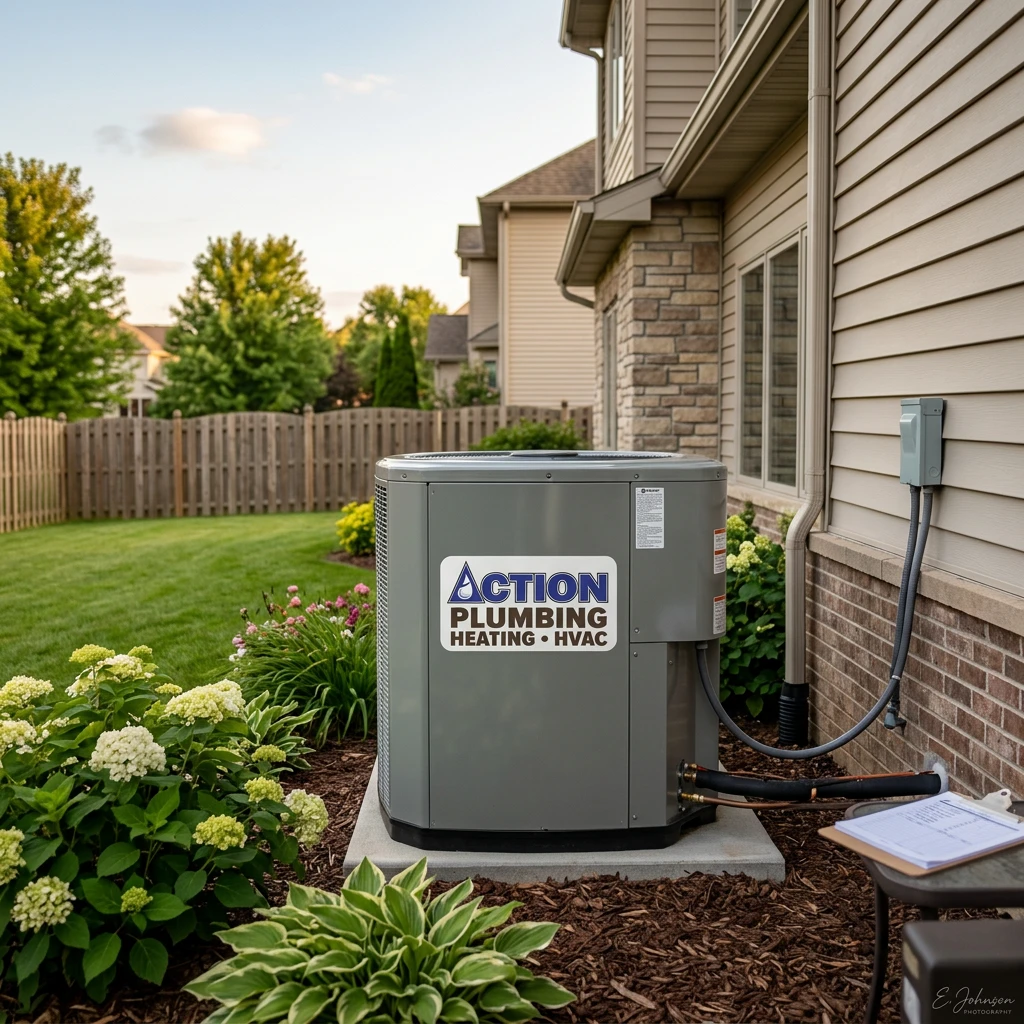
Heat Pump vs. Furnace in Pennsylvania: Start With Your Home
Choosing a heating system is easier when you start with the house, the fuel bill, and what needs replacing. If you’re researching heat pump vs. furnace in Pennsylvania options, the lowest equipment price won’t tell you which system will cost less over time.
At Action Plumbing Heating & HVAC, we help homeowners across Lehigh Valley, PA think through those details. A home in Allentown with natural gas and usable ducts presents a different decision from an Easton home with oil heat and aging air conditioning. Here’s how we recommend comparing the options.
What Each System Does
A furnace burns fuel, commonly natural gas, propane, or oil, to heat air distributed through ductwork. Its AFUE rating describes how much fuel energy becomes useful heat over a heating season. A higher rating means less fuel is lost during that process.
An air-source heat pump uses electricity to move heat indoors. It reverses direction for summer cooling, so it can replace both heating and air conditioning equipment. ENERGY STAR explains how heat pumps provide heating and cooling.
That cooling function matters to the budget. If both systems are nearing replacement, compare a heat pump against the combined cost of a furnace and air conditioner. Our heating and air services cover the systems involved in that decision.
Installation Costs: Compare the Complete Job
There isn’t one reliable installed price for every Lehigh Valley home. Equipment size, access, duct condition, electrical capacity, and fuel connections can change the scope substantially.
A furnace replacement may have a lower upfront cost when the existing fuel service, venting, and ducts remain suitable. Switching fuels or correcting unsafe venting can add work.
A heat pump installation may require an outdoor unit, compatible indoor equipment, electrical modifications, and backup heating. A ductless arrangement avoids installing whole-house ducts, but the number and placement of indoor units affect the price.
Ask for written estimates that identify:
- Equipment models, heating capacity, and efficiency ratings.
- Duct repairs or airflow changes.
- Electrical, venting, fuel-line, and condensate work.
- Backup heating equipment and controls.
- Permits, removal, startup, and installation labor.
For a useful heat pump vs furnace cost Lehigh Valley comparison, both estimates should address the same rooms and comfort goals. A partial-home ductless proposal and a whole-house furnace replacement serve different needs.
Operating Costs: Use Your Actual Utility Bills
Efficiency matters, but fuel prices determine what that efficiency costs you. Gather a full year of electricity and heating-fuel bills before comparing systems.
Use the variable delivered energy cost: supply charges plus delivery charges that increase with consumption. Separate fixed monthly customer charges, which may continue even when you use less energy.
For example, PPL’s residential comparison rates change by effective date. A posted comparison rate alone does not represent every charge on your electric bill. Using it as your complete electricity cost can make projected heat pump savings look larger than they are.
Also separate space heating from other uses. Gas used for hot water or cooking should not all be credited as potential heating savings.
Compare Equal Amounts of Heat
A heat pump’s coefficient of performance, or COP, compares heat delivered with electricity consumed. At a COP of 2, the equipment delivers two units of heat for each unit of electricity.
For illustration, delivering 10 kilowatt-hours of heat at COP 2 requires 5 kilowatt-hours of electricity. Electric resistance backup would require about 10. This is an energy example, not a prediction of your bill.
Furnace calculations similarly need the fuel’s heat content and the furnace’s AFUE. Ask for annual estimates using consistent assumptions about weather, indoor temperature, rates, and backup operation.
Heat Pump Efficiency in Pennsylvania Winters
Cold weather does not automatically rule out a heat pump. It does make equipment selection and sizing especially important.
Under ENERGY STAR’s cold-climate criteria, qualifying equipment must achieve a COP of at least 1.75 at 5°F and retain at least 70% of its heating capacity measured at 47°F. Those are test requirements, not a promise that every installation will heat every house without assistance.
Heat pump efficiency in Pennsylvania winters depends on the specific model, outdoor temperature, installation, and building heat loss. As conditions change, the equipment’s output and electricity use change too.
Before choosing equipment, request:
- A heating-load calculation based on the house.
- Heating output and efficiency data at low outdoor temperatures.
- An explanation of when backup heat would operate.
- An estimate that includes backup energy consumption.
Simply matching the old system’s size can carry an earlier sizing mistake into the replacement.
Your Existing Fuel Source Changes the Decision
If You Already Have Natural Gas
A functioning gas connection and usable ductwork can make furnace replacement straightforward. Compare that option with a cold-climate heat pump using your delivered rates. Neither fuel is automatically cheaper in every home.
If the furnace is relatively new but the air conditioner needs replacement, a compatible heat pump may also be worth considering.
If You Use Oil, Propane, or Electric Resistance
These homes deserve a careful heat pump cost comparison. Savings may be possible, but delivered fuel prices, existing equipment efficiency, and backup operation determine the result.
Check how hot water is produced, too. Replacing space heating may leave another appliance dependent on the existing fuel. Our water heater services can help address that related equipment question.
If You Have Radiators or Baseboards
A forced-air furnace replacement is not a direct swap for a boiler. Ductless heat pumps may offer another route, but room layout and heat distribution need review. Describe the equipment you actually have when requesting estimates.
When Dual Fuel Makes Sense
A dual-fuel system combines a heat pump with a compatible gas or oil furnace. Controls select the heating source according to configured conditions.
This approach can provide flexibility, particularly when a useful furnace remains in place. It also retains maintenance needs for both systems.
The economical switching temperature depends on energy prices and equipment performance; it is not a universal number. For heat pump vs. furnace in Pennsylvania decisions, ask how the proposed controls would balance operating cost and heating capacity.
Choose With a Clear Estimate
Before approving replacement, compare installed cost, projected annual energy use, maintenance needs, and any electrical or duct upgrades. Ask what happens during the coldest conditions and which assumptions could change the savings estimate.
Leave gas, electrical, and venting work to qualified professionals. Stop and call a professional if equipment shows electrical damage or combustion problems. If you smell gas, leave immediately and call the gas utility or emergency services from outside.
We bring over three decades of experience and licensed and certified master plumbers to our work serving Bethlehem, Northampton, the wider Lehigh Valley, and Phillipsburg, NJ. We also offer round-the-clock emergency service.
Call Action Plumbing Heating & HVAC at (610) 252-1256 or contact our team to discuss a heating system that fits your home and budget.
Frequently asked questions
Is a heat pump cheaper to run than a gas furnace in Pennsylvania?
It depends on your delivered electricity and gas rates, the furnace’s efficiency, and the heat pump’s performance at outdoor temperatures throughout winter. Backup heat also affects the total. Compare the cost of delivering the same amount of heat with each system, using your actual utility bills rather than supply-only comparison rates.
Do heat pumps work in Pennsylvania winters?
Cold-climate heat pumps can heat Pennsylvania homes through freezing weather, and some continue operating below 5°F. The important question is whether the selected equipment can meet your home’s heating demand at local winter design temperatures. A contractor should calculate that demand, review low-temperature output, and determine whether backup heating is needed.
Does a heat pump cost more to install than a furnace?
A straightforward furnace replacement may cost less initially when usable ductwork, fuel service, and venting are already present. A heat pump installation may involve electrical work, an indoor unit, and backup heating. However, it also provides cooling, so compare its installed price with a furnace plus air conditioning when both systems need replacement.
Can I keep my furnace and add a heat pump?
A compatible furnace and heat pump can form a dual-fuel system. The heat pump handles heating when conditions favor it, while the furnace takes over according to the system’s controls. A professional must check equipment compatibility, airflow, sizing, and control settings. The economical switching temperature depends on your fuel prices and equipment performance.