Sewer Line Repair in the Lehigh Valley: Camera Inspection Signs
Backups, slow drains, and soggy yard spots can mean a failing sewer line. Here's how to spot trouble early and why camera inspection saves you time and digging.
Sewer Line Repair in the Lehigh Valley: What Fall Warning Signs Mean
If you've noticed slow drains, strange odors, or soggy spots in your yard, you might be looking at a sewer line problem. Sewer line repair in the Lehigh Valley is something we handle year-round, but fall is the best time to deal with it. Once the ground freezes solid, digging gets harder, slower, and more expensive. Catching the signs now, before winter sets in, gives you more options and less stress.
Here's what to watch for, and how a camera inspection helps us fix the right problem the first time.
Why Sewer Lines Fail
Most sewer line problems in older Lehigh Valley homes come down to a handful of culprits:
- Tree roots working their way into cracks or joints, especially common in Allentown, Bethlehem, and Easton neighborhoods with mature trees
- Aging pipe materials like clay or cast iron that crack, corrode, or shift over decades
- Ground settling that creates low spots, or "bellies," where waste and debris collect
- Grease and debris buildup that narrows the pipe over time
- Pipe joint separation from age or ground movement
Any of these can start small and get worse gradually, which is why the early signs matter so much.
Signs of Sewer Line Problems
Pay attention if you notice any of the following:
- Multiple slow drains at once. One slow sink is usually a local clog. Several fixtures draining slowly at the same time, especially the lowest ones in the house, points to a problem farther down the line.
- Gurgling sounds. Air trapped behind a blockage can cause toilets or drains to gurgle when you run water elsewhere in the house.
- Sewage odors. A persistent sewer smell indoors, in the basement, or in the yard near your sewer line often means there's a leak or crack letting gas escape.
- Backups in the lowest drain. If sewage backs up into a basement floor drain or tub when you run the washing machine or flush a toilet, that's a strong sign of a main line blockage.
- Soggy or unusually green patches in the yard. A section of lawn that's greener, softer, or wetter than the rest, especially if it tracks a straight line from your house, can mean wastewater is leaking underground.
- Foundation cracks or settling. In more advanced cases, a leaking sewer line can saturate soil near the foundation, contributing to shifting or cracking.
If you're dealing with any of these, it's worth getting a professional look before the issue turns into a full backup.
How a Sewer Camera Inspection Pinpoints the Problem
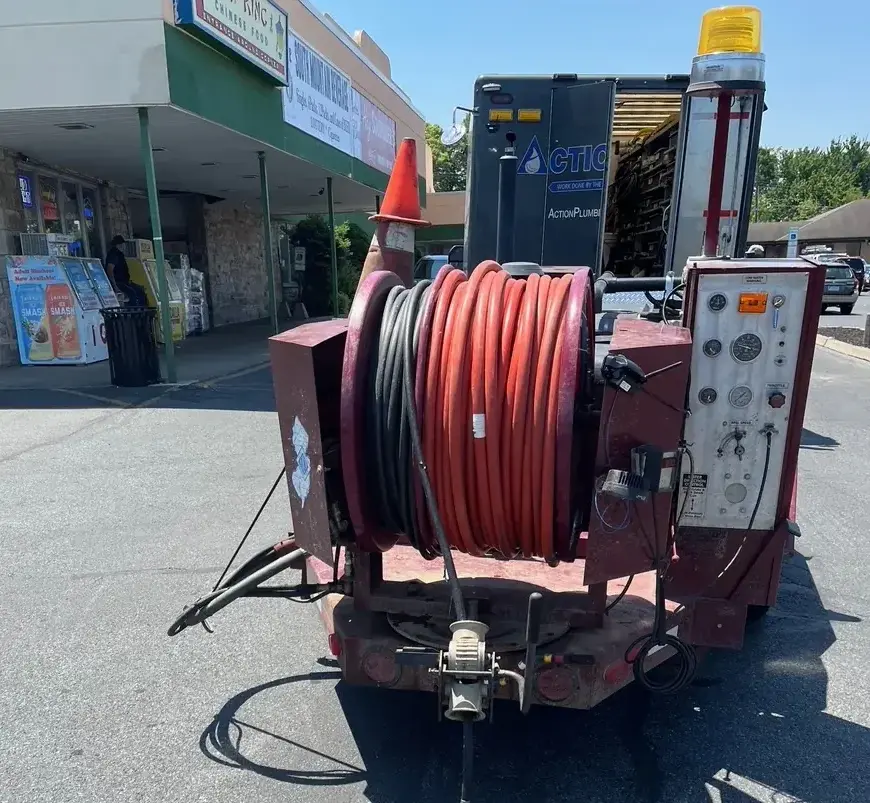
In the past, diagnosing a sewer problem often meant digging first and hoping you found the issue. A sewer camera inspection changes that. We feed a waterproof camera on a flexible cable into your sewer line through an existing cleanout or access point. The camera sends live video back to a monitor, so we can see exactly what's happening inside the pipe.
A camera inspection typically shows us:
- The exact location and depth of the problem
- Whether it's roots, a crack, a belly, or a joint separation
- The pipe material and overall condition
- Whether the issue is isolated or affects a longer stretch of line
This matters because it means we're not guessing. Instead of digging up your entire yard to find a problem, we can often target the exact spot that needs attention. In many cases, this also opens the door to trenchless repair methods that avoid extensive excavation altogether.
What Affects Sewer Line Repair Cost in PA
We won't invent a number here, because sewer line repair cost in PA varies a lot based on factors specific to your property:
- How deep the pipe is buried
- The length of pipe that needs repair or replacement
- Soil conditions and what's above the line, like concrete, landscaping, or a driveway
- Whether trenchless repair is an option or traditional excavation is needed
- The pipe material and age
A camera inspection is really the first step toward an accurate estimate. Once we can see the actual condition of your line, we can tell you what's really needed instead of guessing based on symptoms alone.
Why Timing Matters Before Winter
Frozen ground is tough to dig in, and in the Lehigh Valley, that freeze can set in by late fall. If you're already seeing warning signs, addressing them now means:
- More flexibility in scheduling and repair method
- Avoiding an emergency backup during the coldest months
- Less risk of the problem worsening while you wait
We serve homes and businesses throughout the Lehigh Valley and into Phillipsburg, NJ, and we see this seasonal crunch every year. Acting in October or November beats discovering a frozen, backed-up line in January.
When to Call a Licensed Plumber
A slow drain here and there might be something you can manage with a plunger or drain cleaner. But if you're seeing multiple signs together, especially sewage odors, yard saturation, or backups in your lowest drain, stop troubleshooting on your own and call a licensed professional. Sewer issues that are ignored tend to get more expensive and more disruptive, not less.
Get Ahead of It This Fall
A developing sewer line issue won't fix itself, and winter ground freeze only makes repairs harder. If you're noticing slow drains, odors, or soggy spots in your yard, a camera inspection can tell you exactly what's going on, before it turns into an emergency. Our team has handled sewer and drain cleaning throughout the Lehigh Valley for decades, and we bring licensed master plumbers and round-the-clock emergency service to every call. We also handle plumbing repair and water heater service if other issues come up along the way, and keep your heating and air conditioning systems running through the season.
Don't wait for frozen ground to make things harder. Call Action Plumbing Heating & HVAC at (610) 252-1256 or contact our team to schedule a sewer camera inspection before winter sets in.
Frequently asked questions
How much does sewer line repair cost in PA?
Cost depends on the length of pipe affected, depth, soil conditions, and whether trenchless repair is possible. A camera inspection lets a licensed plumber give you an accurate, specific estimate for your property instead of a rough guess, so you know what you're dealing with before work begins.
What are the signs of sewer line problems?
Common warning signs include multiple slow drains at once, gurgling noises from toilets or sinks, sewage odors indoors or in the yard, unusually green or soggy patches of lawn, and sewage backing up into the lowest drain in your home, often a basement floor drain or tub.
How does a sewer camera inspection work?
A plumber feeds a waterproof camera attached to a flexible cable into your sewer line through a cleanout or drain access point. The camera sends live video to a monitor, letting the technician see cracks, bellies, root intrusion, or blockages inside the pipe without digging up your yard first.
Can tree roots really break a sewer pipe?
Yes. Tree roots are drawn to the moisture and nutrients inside sewer lines and can work their way into small cracks or joints, especially in older clay or cast iron pipe. Once inside, roots expand and can crack, crush, or completely block the line over time.
Why should I fix a sewer line before winter?
Once the ground freezes, excavation becomes slower, more expensive, and sometimes impossible until spring. Addressing a developing sewer problem in fall means you avoid an emergency backup in frozen conditions and give your plumber more flexibility in how they approach the repair.